What Is It?
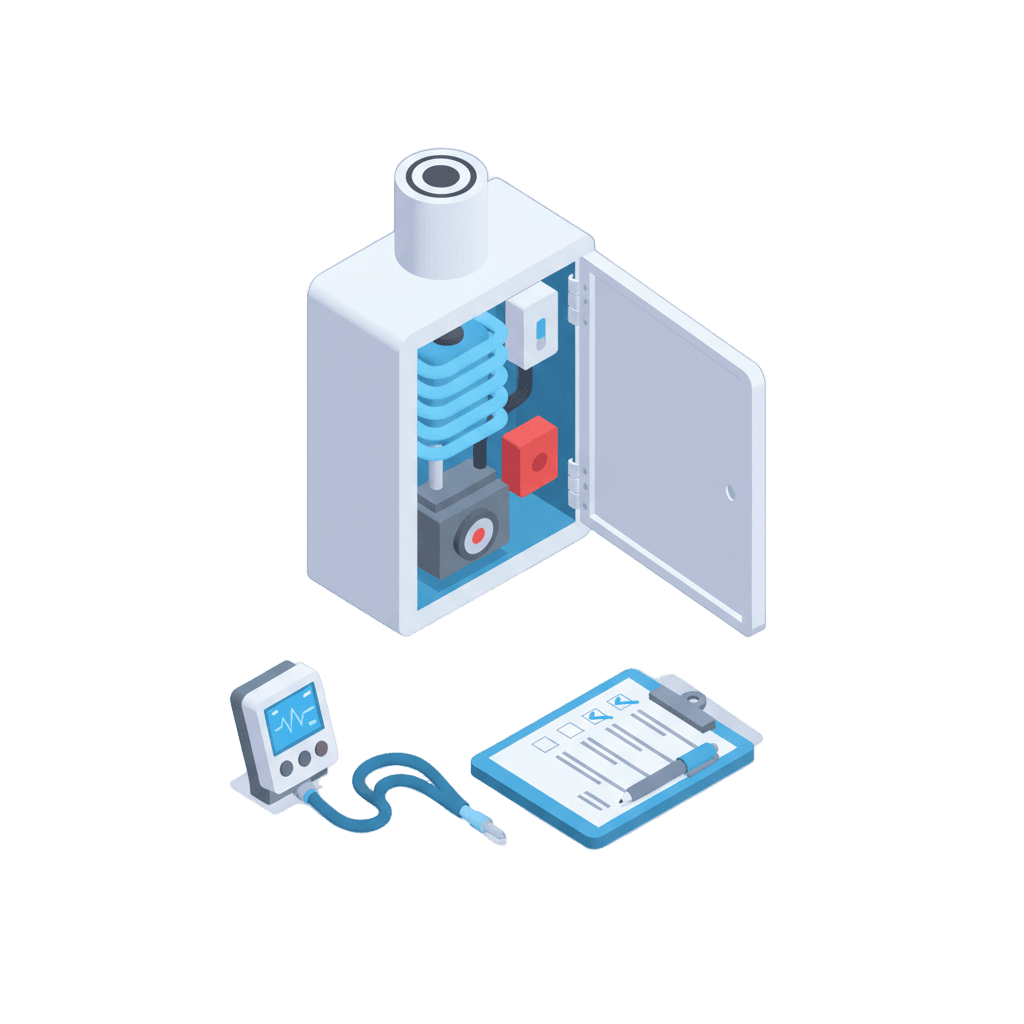
An unvented cylinder service record is a document completed at the annual service of an unvented (mains-pressure) hot water cylinder. It records the system details, the checks carried out on each safety device, the measured readings taken, any defects found and any parts replaced. Because an unvented cylinder relies on layered safety devices to prevent it overheating or over-pressurising, the record provides evidence that the system has been maintained, that the safety controls function, and that the discharge arrangement remains correct.
About This Template
An unvented hot water cylinder stores hot water under mains pressure, and its safety depends on a set of protective devices working correctly. An unvented cylinder service record documents the annual check of those devices — the expansion vessel, the temperature and pressure relief valve, the expansion relief valve, the tundish and the discharge pipework — so that the system stays safe and any manufacturer warranty remains valid. Installation and work on unvented systems with a storage capacity over 15 litres is notifiable building work under Building Regulations Part G, and the operative must hold the relevant competency for unvented hot water systems. A clear annual record protects the homeowner, the installer and the warranty.
When to Use
- At the annual service of an unvented hot water cylinder, as recommended by the manufacturer to keep the warranty valid
- After installing a new unvented cylinder, to record the first commissioning checks and readings
- When a landlord or managing agent needs documented evidence that the hot water system has been maintained
- Before selling a property, to show prospective buyers the cylinder has been serviced by a competent person
- When investigating a fault such as discharging relief valves, fluctuating pressure or insufficient hot water
- When taking over the maintenance of a property and a baseline service record of the cylinder is needed
What to Include
- Property and customer details, plus the date of service and date of the next recommended service
- Cylinder details: make, model, serial number, storage capacity in litres, year of installation and heat source (boiler coil, immersion or both)
- Operative details: name, business, and the relevant unvented hot water systems competency qualification reference
- Expansion vessel: pre-charge pressure checked against the manufacturer's specification, and whether the vessel was found satisfactory or re-charged
- Temperature and pressure relief valve: visual condition, manual test operation, and confirmation it reseats correctly
- Expansion relief valve: visual condition, manual test operation, and confirmation it reseats and does not weep
- Tundish: presence, visible condition, correct location below the relief valves, and confirmation it is unobstructed and visible
- Discharge pipework: condition and routing of the D1 pipe (relief valve to tundish) and the D2 pipe (tundish to a safe, visible discharge point), and confirmation the termination is to a safe place
- Immersion heater and thermostat: operation of the thermostat and any high-limit cut-out, and the stored water temperature setting
- Operating pressure and balanced cold supply: incoming pressure, any pressure reducing valve setting, and the condition of strainers and check valves
- Defects identified, parts replaced, and any remedial work required with priority
- Confirmation of whether the system is safe to use, and the operative's signature and date
Tips
Always check the expansion vessel pre-charge against the manufacturer's stated figure rather than a generic value — a flat or incorrectly charged vessel is the most common cause of relief valves discharging
Manually exercise the temperature and pressure relief valve and the expansion relief valve, and confirm each one reseats fully — a valve that weeps after testing needs replacing, not leaving
Check that the tundish is visible and unobstructed and that the D2 discharge terminates somewhere safe and visible; a discharge that cannot be seen means a fault could go unnoticed
Record the cylinder serial number and model every time — it identifies the correct spare parts and the manufacturer's specific service requirements and pre-charge figures
Leave the completed record with the customer and remind them that annual servicing by a competent person is usually a condition of the manufacturer's warranty on the cylinder